

Low vision is a level of vision loss that can’t be fully corrected with traditional vision-correction methods like glasses, contact lenses, or surgery. If you have low vision, you might feel overwhelmed about how to manage daily tasks like reading, cooking, or recognizing faces. At Professional Eyecare Centers, we want you to know that having low vision doesn’t mean you have to give up the activities you enjoy.
Low vision therapy is an option for managing the condition by teaching you techniques and providing devices that help you make the most of your remaining vision, helping you to maintain independence and quality of life. Low vision therapy doesn’t restore vision, but it can help you make the most of the vision you have.
What Is Low Vision and Who Benefits from Therapy
What Qualifies for Low Vision?
Low vision therapy is typically recommended when vision loss begins to interfere with daily activities, and it’s typically defined as vision worse than about 20/70, even with correction.
What Causes Low Vision?
If you or someone you love has low vision, you might be wondering about what causes it. There are several eye conditions that can result in low vision, but some of them include:
- Age-related macular degeneration (AMD), which affects central vision.
- Diabetic retinopathy, which occurs when diabetes impacts the back of the eye (the retina).
- Glaucoma, which damages the optic nerve (which sends signals to the brain) and is often associated with increased eye pressure.
These conditions affect different parts of your visual system, so your therapy approach has to be tailored to address your specific vision challenges. Understanding more about low vision rehabilitation can help you prepare for your therapy journey.
How Low Vision Therapy Works
Visual Skills Training and Rehabilitation
Your low vision therapy may focus on teaching you how to use the healthy parts of your vision more effectively. You can learn scanning techniques to locate objects faster and develop specific viewing skills to help you see around damaged areas of your retina (the back of your eye).
The eye doctor can guide you through exercises that help you use your remaining vision more effectively. These might include tracking moving objects, improving your eye coordination, or practicing specific head and eye movements that get the most out of your functional vision.
Device Training and Equipment Selection
You can work hands-on with various magnification tools and electronic aids during your sessions. Our team can help you determine which devices may work for your specific needs and lifestyle.
Training includes learning proper positioning, lighting techniques, and efficient scanning patterns with each device. You can practice real-world tasks like reading mail, writing checks, or viewing photos until you feel comfortable using your new tools independently.
Environmental Modifications
Your therapy may include learning how to make your surroundings safer and more comfortable for your vision. This may cover lighting adjustments, contrast enhancements, and organization strategies that can reduce visual demands.
You can discover how different types of lighting affect your vision and learn to position task lighting for various activities. Sometimes, small changes (like better lighting or higher-contrast labels) can make a bigger difference than you’d expect. Our team can also provide guidance on color choices and home modifications that support your daily routines.
Your Low Vision Evaluation and Assessment Process
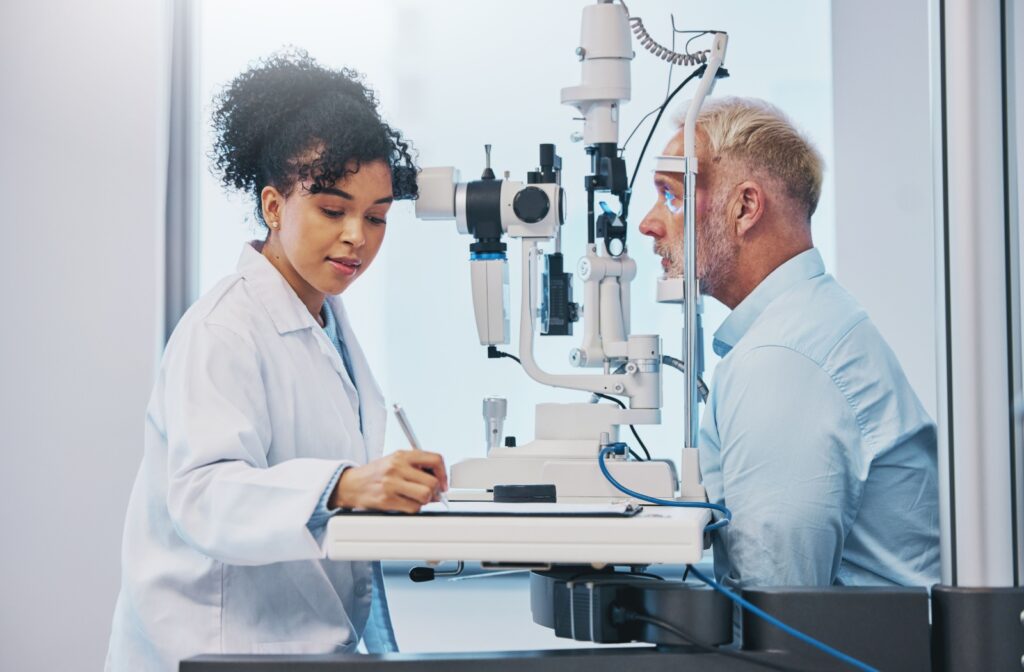
Comprehensive Vision Testing
Your evaluation begins with specialized testing that goes beyond standard eye charts. The eye doctor may use contrast sensitivity tests, visual field assessments, and functional vision measurements to understand exactly how your vision works in real-world situations.
These tests can help identify which visual skills are strongest and which areas need support through therapy or assistive devices.
Daily Activities Discussion
You can spend time discussing the specific tasks that are most important to you: Whether that’s reading books, cooking safely, or maintaining hobbies. This conversation helps the team understand your priorities and lifestyle needs.
The eye doctor can ask about challenges you face with moving around, household tasks, work activities, and hobbies to create a complete picture of your functional vision needs.
Personal Goals and Treatment Planning
Based on your evaluation results and personal priorities, our team can develop a customized therapy plan. Your goals might include reading for longer periods, cooking on your own, or feeling confident navigating your neighborhood.
Each treatment plan includes specific techniques to practice, devices to try, and environmental changes to consider. The approach focuses on what matters most to your daily life and independence.
Types of Low Vision Devices and Technology
Magnification Tools
Traditional magnification options can provide reliable, portable solutions for many daily tasks. These may include:
- Handheld and stand magnifiers
- Spectacle-mounted telescopes
- Telescopic lenses
These devices are generally simple and low-maintenance, making them dependable choices for reading, crafts, and detailed work. Our team can help you find the right magnification level and style for your specific needs, similar to how they assist with selecting specialty lenses.
Electronic and Digital Solutions
Electronic devices can provide adjustable magnification, improving contrast, and color options that you can customize for different tasks. Many also include text-to-speech features for additional support.
Electronic options for low-vision can include:
- Video magnification systems
- Smartphone accessibility features
- Computer screen reading software
Schedule Your Low Vision Assessment
Our team at Professional Eyecare Centers offers comprehensive low-vision therapy services tailored to your individual needs and goals. We have 6 convenient locations across North Dakota, making it easier than ever to find the care you need. Low vision is challenging, but it doesn’t mean that you have to give up your favorite activities. Schedule your evaluation today.