

Key Takeaways
- Myopia happens when the eyeball grows too long, and prescriptions can keep getting stronger over time
- Stellest lenses are glasses for kids that can help slow myopia progression
- Other myopia control options include MiSight contacts, atropine therapy, and Shaw lenses
- The right option depends on your child’s prescription history, age, and daily habits
- Professional Eyecare Centers offers comprehensive myopia control appointments across six locations in North Dakota
What Myopia Actually Does to Your Child’s Eyes
Your child squints at the whiteboard. They scoot closer to the TV than you’d like. Maybe they mention headaches after school. These small moments can add up to something worth paying attention to.
Stellest lenses are one option that can help slow myopia progression in kids, giving their eyes a better chance of staying stable as they grow. But before getting into how they work, it helps to understand what’s actually happening inside your child’s eye.
Myopia, or nearsightedness, happens when the eyeball grows a little too long from front to back. That extra length causes light to focus in front of the retina instead of directly on it, which makes distant objects look blurry. The tricky part is that this growth doesn’t always stop on its own. Prescriptions can keep climbing year after year, and higher levels of myopia are associated with certain eye health concerns later in life.
Signs Your Child May Have Myopia
Kids don’t always know their vision isn’t normal. Watch for these signs during everyday activities:
- Squinting at boards, screens, or objects across the room
- Sitting much closer to the TV than usual
- Frequent headaches or eyes that tire out quickly
If any of these sound familiar, a children’s eye exam with the team at Professional Eyecare Centers can give you a clear picture of what’s going on.
What Stellest Lenses Are and How They Work
A Different Kind of Glasses Lens
Stellest lenses look like regular glasses lenses, but the design is doing something specific. The center of the lens gives your child sharp, clear vision for everyday tasks. Surrounding that center are tiny lenslets, small optical zones that send a signal to the eye to slow down its growth. That’s the key difference between Stellest and a standard prescription lens.
These lenses are designed for school-aged children, and the team at Professional Eyecare Centers can determine whether they are an appropriate fit for your child, generally for kids up to age 16 depending on the situation. They fit into regular frames, so your child doesn’t have to give up the pair they love. If you’d like to explore what frames are available, the frames and lenses collection covers a wide range of options.
What Kids Can Expect Day to Day
The adjustment is usually smooth. Most kids adapt within a few days and don’t notice much difference in how the lenses feel compared to their old pair. For the lenses to do their job, though, your child needs to wear them throughout the day, not just for school or screens—consistent, all-day wear is what makes the difference.
Consistent wear is what makes the difference.
Other Myopia Control Options Worth Knowing About
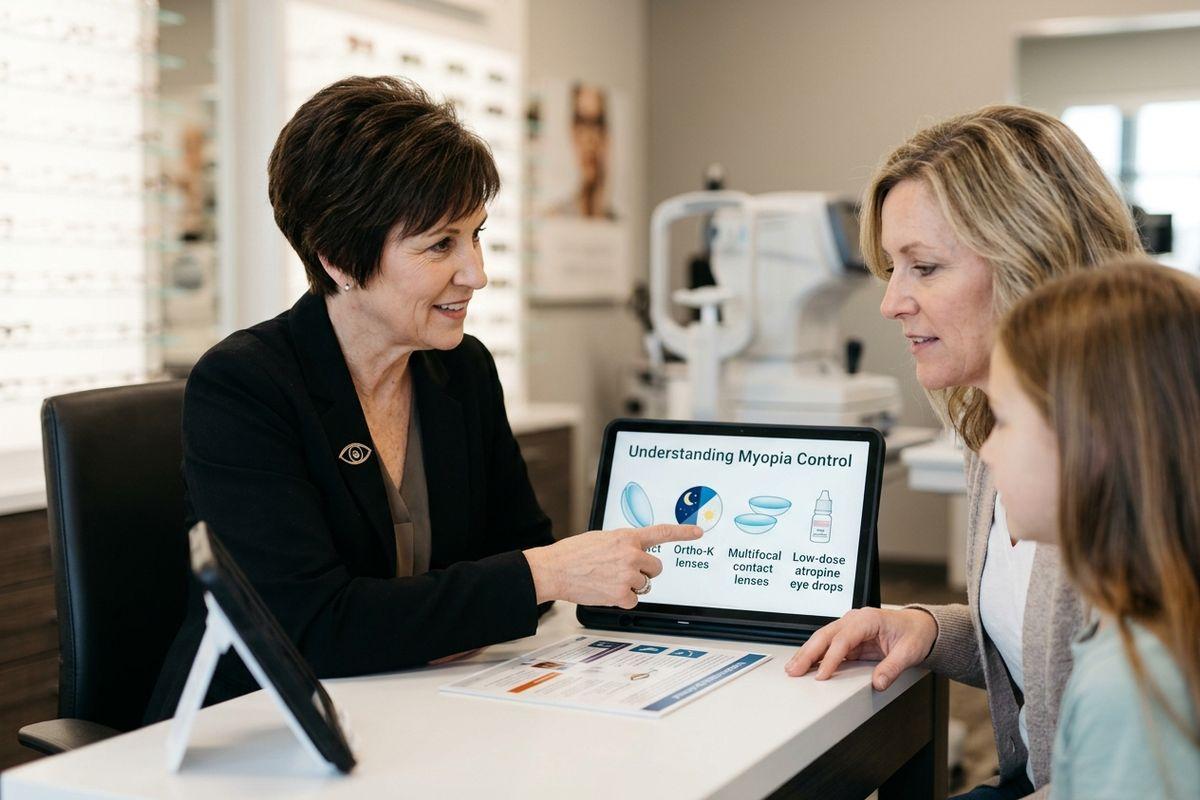
Stellest lenses are a good fit for a lot of kids, but they’re not the only tool available. The doctor will look at your child’s full picture before recommending a path forward. You can get a fuller overview of what’s offered through the myopia control service page.
Contact Lens and Eye Drop Options
Some kids are ready for contact lenses, and myopia control options exist in that category too. MiSight contacts are FDA-approved daily wear lenses designed specifically to help slow myopia progression in children. Atropine therapy uses very low-dose eye drops applied at night to reduce the rate at which the eye grows. Both can be used on their own or alongside other treatments, depending on what the doctor recommends.
Lens-Based Alternatives
Shaw lenses are another glasses-based option worth knowing about. These are customized lenses designed to reduce the eye strain that can come with stronger prescriptions, and they may be a good match for certain kids. The doctor can walk you through the differences and help match your child to the option that fits their prescription, age, and daily routine.
Is Your Child a Good Candidate for Stellest Lenses?
Who Stellest Lenses Tend to Work Well For
Not every child needs the same approach. Stellest lenses tend to be a good fit for kids who meet a few general criteria:
- School-aged children with a prescription that has been changing
- Children who aren’t yet ready or interested in contact lenses
- Kids with an active lifestyle who are comfortable wearing glasses throughout the day
What the Doctor Looks At
The doctor will review your child’s prescription history to see how quickly things have been changing. Age, overall eye health, and daily habits all factor into the recommendation too. This isn’t a one-size-fits-all decision, and the team takes time to look at the full picture before suggesting a direction. Research on myopia management continues to reinforce how much early intervention can matter for kids whose prescriptions are progressing.
What to Expect at a Myopia Control Appointment
The appointment starts with a comprehensive eye exam to get an accurate look at your child’s current prescription and how it compares to previous visits. From there, the doctor will talk through myopia control options, including Stellest lenses, MiSight contacts, atropine therapy, and Shaw lenses, so you understand what each one involves before making any decisions.
Follow-up visits are part of the process. Myopia control isn’t something that gets checked once and forgotten. Regular monitoring helps the team track how your child’s eyes are responding and adjust the approach if needed.
If your child’s prescription has been changing and you’re ready to take a closer look at what myopia control can do, Professional Eyecare Centers has six convenient locations across North Dakota ready to help. Schedule an appointment today and let the team guide you through the options that make the most sense for your child.