


Key Takeaways
- Nearsightedness often starts and progresses during the school years.
- Standard lenses correct blurry distance vision, but they don’t slow changes.
- Myopia control glasses include names like MiYOSMART, Stellest, and MyoCare.
- Soft daily lenses such as MiSight 1 day and overnight ortho-k lenses are also options.
- Low-dose atropine drops are also an option.
- Yearly eye exams help track prescription changes over time.
What Myopia Control Lenses Do for Your Child
Your child squints at the whiteboard, moves closer to the TV to watch their favorite show, and their prescription gets stronger every year. This is a familiar pattern for our team at Professional Eyecare Centers, as it often signals the presence of myopia.
Myopia control lenses come in a few forms, including glasses, soft daily contact lenses, and overnight ortho-k lenses. The goal of each of these methods is the same: to help slow down the progression of myopia.
Why Slower Progression Matters
Steadier prescriptions mean fewer surprises at each annual visit. Less nearsightedness by adulthood is also linked with a lower risk of eye health issues later in life, so the work you put in during elementary and middle school can pay off for decades.
Glasses Designed for Myopia Control
Myopia control glasses look and feel like regular glasses. Your child picks a frame, wears them to school, and nobody at the lunch table can tell the difference. However, in addition to correcting vision, these glasses are designed in a way that slows down the rate at which myopia gets worse.
Families in Jamestown often ask about three brands by name. These are MiYOSMART, Stellest, and MyoCare. Our optical team can walk you through how these lenses are made and which frames pair well with them.
Soft Contact Lenses & Ortho-K Options
Some kids would rather skip frames altogether. Daily soft lenses like MiSight 1 day go in each morning and come out at night, with a fresh pair every day.
Ortho-k works on a different schedule, with lenses being worn overnight and then removed each morning. This allows your child to go through their school day without having to wear glasses or contacts.
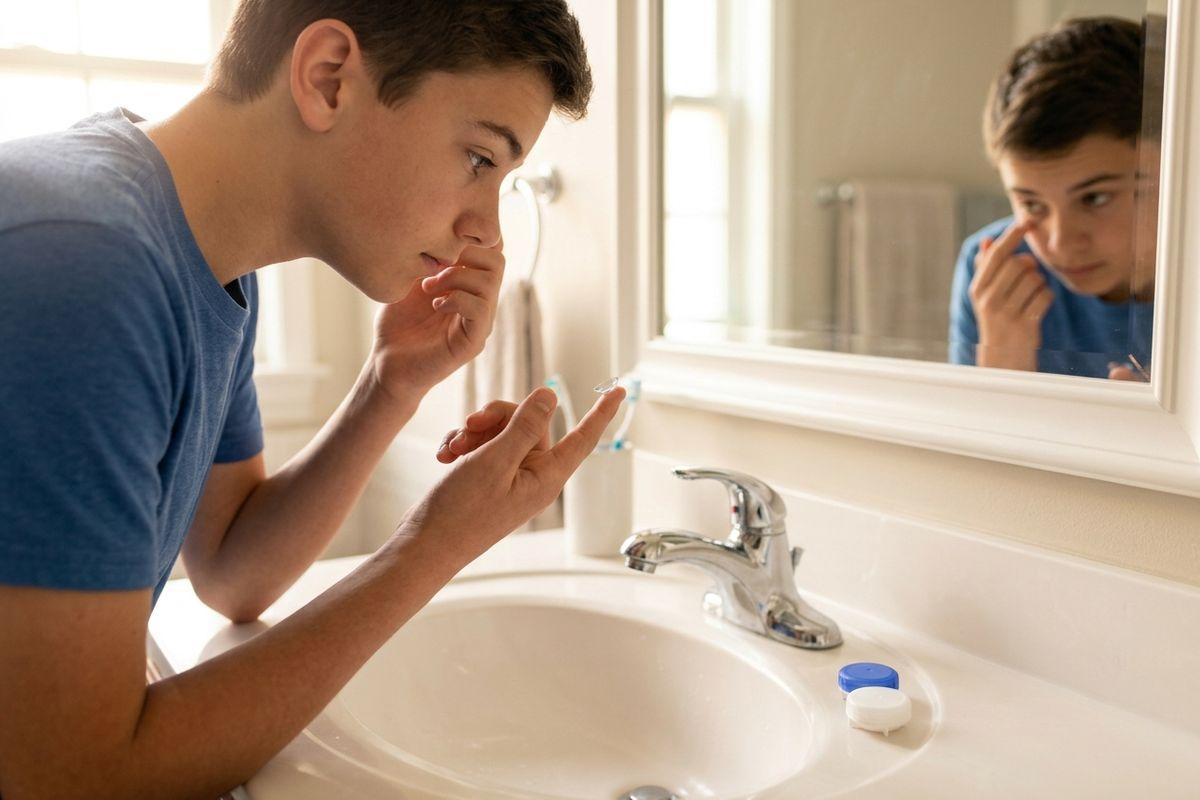
Daily Wear Habits That Matter
- Wearing the lenses as directed each day affects the results you can expect.
- Hygiene and handling are taught at the office, and your child can practice before taking their lenses home.
- Ortho-k needs more frequent follow-up visits than glasses or soft lenses.
Other Approaches Your Eye Doctor May Discuss
Low-dose atropine drops are used once daily, usually at bedtime. They don’t correct blurry vision on their own, so your child still needs glasses or contacts for clear distance vision.
Habits That Support Treatment
More outdoor time each day helps slow or prevent myopia, so it’s worth having your child spend regular and significant time outside.
Breaks during reading, homework, and screen time help as well. A short pause every now and then to look out the window gives your child’s eyes a rest from close work.
How to Choose the Right Option in Jamestown, ND
Age, prescription strength, comfort, and daily routine all contribute to choosing the right lenses for myopia control. A first-grader with a mild prescription and a ninth-grader on the hockey team may end up making different choices. But that’s okay!
Many kids start myopia control somewhere between ages 6 and 16. Yearly eye exams track changes over time, which is how your eye doctor knows whether the current plan is doing its job or needs a tweak.
Questions to Bring to Your Appointment
- Which option fits your child’s school and sports routine?
- What does follow-up care look like through the year?
- How do the different brands and lens designs compare?
Professional Eyecare Centers carries the name brands families ask about, and our team takes the time to explain each one. Book a myopia control consultation at any of our six North Dakota locations, and bring your questions along.